If you spend enough time scrolling through X or listening to the latest tech keynotes, you have probably heard Elon Musk talk about the Age of Abundance. It is this shiny, utopian vision where AI does the heavy lifting, humanoid robots fold your laundry, and everyone has everything they want. It sounds like a dream, or at the very least, a very high-budget sci-fi trailer.
But there is a catch. There is always a catch.
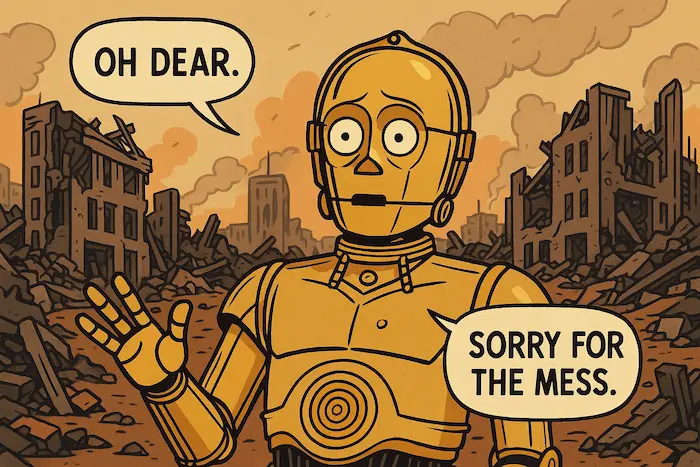
If eight billion people suddenly have everything they want, our planet is going to have a very bad time. You cannot have infinite consumption on a finite rock without some serious, physics-defying consequences. This is why I believe that once AI takes over the coding, the spreadsheets, and the endless middle management meetings, we are left with one singular, massive task.
Sustainability is not just a buzzword for corporate reports anymore. It is likely the last job humans will ever have.
From vacuuming to vascular surgery
When I talk about robots doing everything, I am not just talking about a Roomba that occasionally gets stuck on a rug. We are moving toward a world where your domestic AI is your personal chef, your educator, and even your emergency room doctor.
Imagine you are in the kitchen, trying to be the cool dad and dicing onions for a Sunday roast. You lose focus for a split second, and suddenly you have sliced a bit more of your finger than the recipe called for. In this future, your robot doesn't just beep an error code. It puts down the vacuum cleaner, switches an attachment, and patches you up on the spot with the precision of a world-class surgeon.
When robots can handle everything from our chores to our healthcare, what is left for us to do?
I read Marc Andreessen's take that Venture Capital (VC) would be the last job ever. I love the ambition, Marc, I really do. But I have to disagree. Hunting for the next unicorn is a blast, but it is hard to do when the ecosystem is literally and figuratively collapsing. Moving numbers around a screen to fund the next "Uber for pets" is not the endgame. The endgame is survival. We are moving from a growth at all costs economy to a staying alive economy.
The brains behind the machine: why I joined Pilario
This shift is exactly why I recently stepped into the role of CTO at Pilario. For the last few years, Pilario has been doing the vital work of managing the Life Cycle Assessment (LCA) of products for some of the world's leading companies. They have been doing the hard math on what a product actually costs the Earth, from the moment a raw material is pulled out of the ground to the moment it ends up in a landfill.
My mission at Pilario is to help design the AI models that will support the decision-makers of the future. And by decision-makers, I don't just mean CEOs in glass offices. I mean that robot in your kitchen.
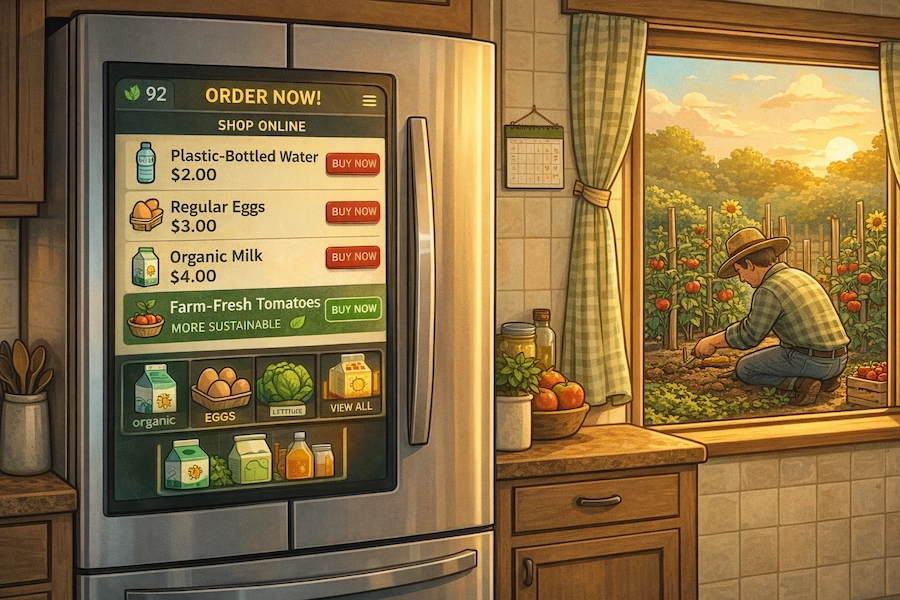
If your household AI is tasked with protecting your interests, it needs to be an expert in sustainability. It needs to know that ordering a certain plastic toy might be cheaper today, but the long-term cost to the air your children breathe makes it a terrible investment.
At Pilario, we are essentially building the conscience for the next generation of AI. We are teaching the machines how to value the world correctly because, let's be honest, humans haven't been great at it.
The "Alien" logic of sustainability
Have you seen the recent Apple TV series Pluribus? In it, a collective, almost hive-mind logic takes over humanity. The characters suddenly change their entire lifestyles, not because they want to, but because it is the only mathematically sound way for the species to survive.
This is exactly how a truly smart AI would act. If an AI is tasked with protecting you, it eventually realizes that protecting your environment is protecting you. It doesn't care about consumer trends or status symbols. It cares about resource loops.
If we give AI the keys to our supply chains, it will likely start making decisions that look alien to us. It might refuse to order that trendy fast-fashion jacket because the carbon debt is too high. It might tell you that your house is running at 80% efficiency and suggest a lifestyle change that feels drastic but is actually necessary.
The robot becomes the ultimate sustainability manager, not for a corporation, but for your life.
Universal Basic Sustainability: the new paycheck
We talk a lot about Universal Basic Income (UBI) as the solution for AI-driven job loss. But where does that money come from, and what behavior does it encourage? If we just give everyone cash to buy more stuff, we accelerate the problem.
I can envision a world where your income is tied to your sustainability score.
Instead of being paid to work in the traditional sense, your job is to live in a way that allows the system to persist. The more efficient you are, the more you contribute to the circular economy, the better your paycheck.
In this scenario, work becomes a form of stewardship. You are compensated for being a good ancestor. It sounds like science fiction, but when you remove the need for human labor to produce goods, the only thing left to regulate is the consumption and recycling of those goods. We are basically gamifying the survival of the species.
The bridge generation
My generation is the Bridge Generation. We remember the world before the internet was in our pockets, and we are the ones building the AI that will define the next century.
Living here in Portugal, you feel the connection to the land and the ocean much more acutely. I don't want my kids to grow up in a world of radical abundance if that world is a gray, overheated husk of a planet. I want them to have a world that functions.
So, if you are worried about what you will do when the AI takes your current job, don't sweat it. You're just getting a promotion to Planet Steward. The benefits are great, but the stakes are literally everything.
The irony of the AI revolution is that we are building the most advanced technology in history just to learn how to live like we used to: within our means.
Even in the Age of Abundance: